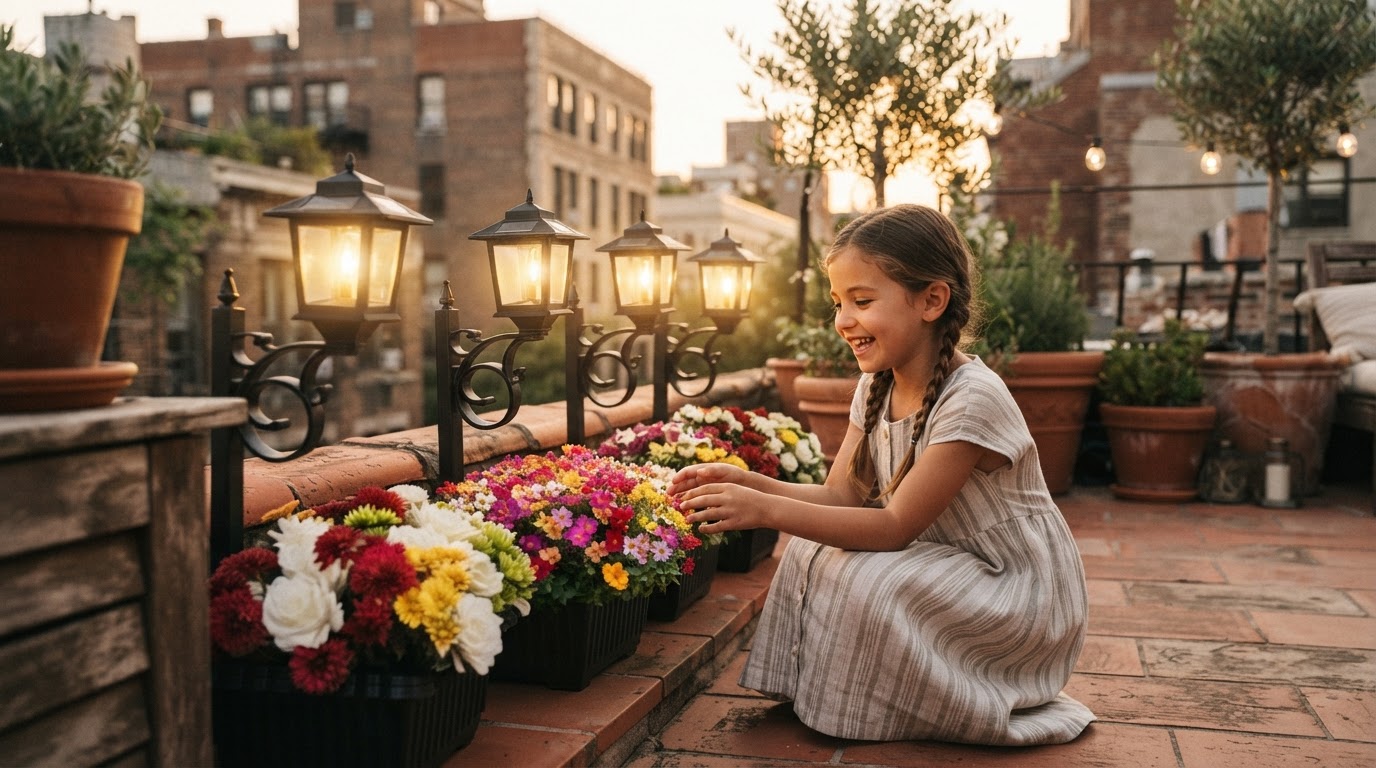
A 4-Step Framework for Solar Planter Lamp Terrace Layouts
 Maya ChenContributing Editor
October 21, 2026 — The shift toward integrated terrace illumination has accelerated, with the Solar Planter Lamp emerging as a primary solution for high-density urban outdoor spaces.
Conventional wisdom suggests that any sun-drenched corner can support a decorative light, but the reality of terrace microclimates often undermines this assumption. Homeowners frequently struggle with inconsistent runtimes because they ignore the specific solar harvest requirements of integrated units. Data from Articture indicates that high-quality glowing planter lamps, available in sizes up to 37.5 inches, can provide up to 10 hours of light when positioned correctly, but this duration is entirely dependent on unobstructed photovoltaic exposure. Simply placing a pot near a railing is rarely sufficient for consistent year-round performance.
The 4-Step Placement Logic
To ensure the Solar Planter Lamp operates at peak efficiency on a terrace, one must move past aesthetic placement and focus on the technical limitations of solar-integrated hardware. First, run the math on shadow casting: a terrace railing that appears low at noon may cast a five-foot shadow by 4:00 PM, effectively cutting the charging window by 30%. Second, prioritize the 3000K color temperature units to maintain visual warmth without the harsh blue-light glare common in cheaper LED alternatives. Third, account for the drainage requirements of the internal planter; unlike standard pots, a solar powered plant pot requires a clear path for moisture that does not interfere with the battery housing or the LED drivers. Fourth, verify the IP rating against the specific wind-driven rain patterns of your terrace elevation. While many units claim weatherproofing, consistent performance requires a housing that protects the internal 1.2V or 3.7V battery systems from the humidity traps common in dense foliage. The glow in the dark planters solar systems often fail because users treat them as passive decorations rather than active electronic components that require cleaning. For those managing delicate greenery, checking the best solar lights for succulent pots is essential, as the heat dissipation from the lamp base can alter the soil temperature in small terrace containers.
Expert tip: Use a digital light meter to identify the exact spot on your terrace that receives at least six hours of 10,000+ lux; placing your lamp in a zone that only hits 5,000 lux will result in a 50% reduction in nightly illumination regardless of the battery capacity.
Here’s the part nobody talks about: most terrace owners overestimate their sun exposure by at least two hours daily. I’ll change my mind when manufacturers start including real-time charging telemetry in the base units, but until then, manual placement based on solar tracking is the only way to avoid the "dim-by-midnight" syndrome common in urban setups. Proper integration requires treating the lamp as a utility first and a planter second. If you are debating between a standalone stake and a solar powered plant pot, remember that the weight of the soil in a planter provides necessary ballast against terrace wind gusts that often topple lighter fixtures.
Sources
Photo by Gorma Kuma on Pexels
- Flower Pot Lamp — Solar Outdoor Planter Light - Articture
- 10.5 in. Outdoor Flower Planter Solar Pot Stand with Uplight Accent
- Solar Lights in Flower Pots - Pinterest