Choosing the Solar Planter Lamp for Succulent Collections
 Jordan HaleStaff Writer
October 17, 2026. This narrative exploration examines the specific lighting requirements for low-profile succulent arrangements and how integrated fixtures provide a seamless aesthetic. It is written for home gardeners looking to balance architectural plant life with reliable evening illumination.
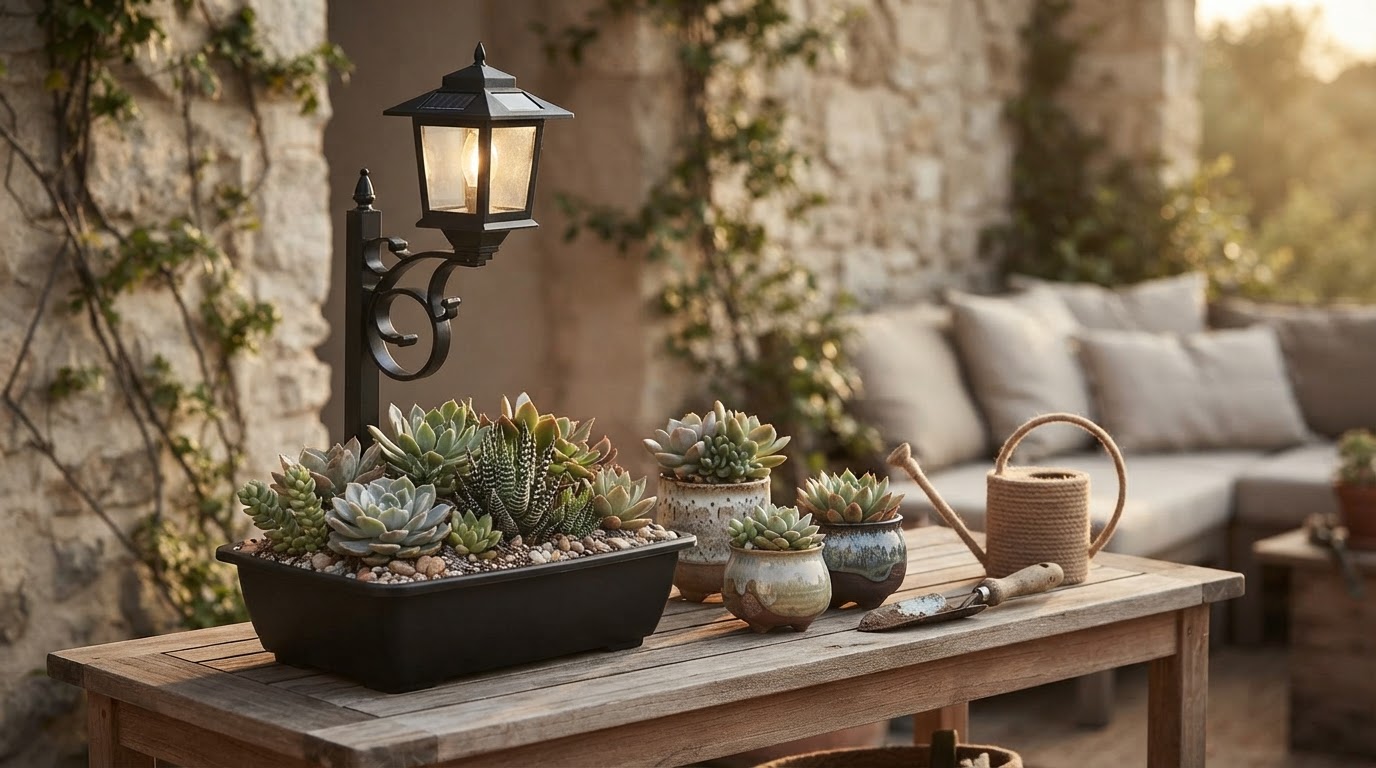
The first thing I noticed was the way the evening light caught the waxy edges of my Echeveria, only to let them vanish into a dark blur ten minutes later. Succulents are sculptures by day, but without a dedicated light source, they become invisible lumps in the garden after dusk. I spent a few weeks experimenting with standard garden spikes, but the proportions always felt off—the bulbs were either too tall, casting long, distorting shadows, or too weak to penetrate the dense rosettes. According to Gardenesque, models like the LED Garden Solar Rock Lights are often favored for blending into borders, but when you are dealing with the confined geometry of a container, the light needs to be part of the vessel itself. Many enthusiasts in community forums have noted that low voltage lighting typically offers better durability, yet the complexity of wiring a terrace often leads people back to the simplicity of solar. I found that the challenge wasn't just finding a light; it was finding a light that didn't crowd the shallow root systems of my Crassula and Sedum.
It turns out that the Solar Planter Lamp solves this spatial conflict by integrating the light post directly into the structure of the pot. When I transitioned my collection into a solar powered plant pot, the difference in visual weight was immediate. The 3000K warm white LED provides a soft glow that mimics the golden hour, which is far more flattering to the muted greens and purples of succulents than the harsh blue light found in cheaper hardware store alternatives. Because these plants require excellent drainage and often sit in gritty, porous soil, having a solar lamp for terrace pots that is built to handle outdoor moisture is essential. The lamp post design elevates the light source, allowing it to wash over the entire arrangement from above rather than blinding the viewer from a low angle. This setup effectively creates illuminated outdoor planters that function as beacons on a dark porch. I noticed that the integrated planter base provides enough ballast to keep the light steady even during late-autumn wind gusts, a common issue with top-heavy solar powered plant pots that rely on thin plastic stakes.
Somewhere around week two, I realized that the success of a solar lamp for plants outdoor depends entirely on the harmony between the light's duration and the plant's placement. Succulents need sun, and fortunately, so does the Solar Planter Lamp. To ensure your succulent display remains vibrant and visible, consider this framework for your setup: first, verify the IP rating to ensure the unit is waterproof, as succulent soil stays dry but the electronics must survive the rain; second, choose a fixture with a 3000K color temperature to highlight the natural textures of the leaves; third, ensure the planter base has adequate drainage holes to prevent root rot; and finally, check the battery capacity to ensure the light lasts at least 6-8 hours after a full day of sun. I keep coming back to the idea that a garden should be as functional at midnight as it is at noon. By using a dedicated solar planter lamp, you avoid the cluttered look of multiple wires and stakes, keeping the focus on the plants themselves.
Sources
Photo by Unggul Budi on Pexels
- The best solar lights in 2026, as tested by our reviews experts
- What are good solar accent lighting models for potted plants? - Facebook
- Making Solar Lights in Planted Pots - YouTube