Enhancing Curb Appeal with the Solar Planter Lamp
 Jordan HaleStaff Writer
July 10, 2026. This exploration looks at the functional intersection of botanical displays and sustainable lighting for homeowners seeking to elevate their outdoor entryways. It is written for those who value both utility and aesthetic coherence in landscape design.
The first thing I noticed was the silence of my front porch at dusk—a heavy, uninviting darkness that seemed to swallow the petunias I had carefully nurtured all spring. Traditional wired lighting felt like a logistical nightmare involving trenching and electrical permits, while standard plastic stakes often lacked the height to make a real visual impact. According to Gardeners Supply, the fastest and easiest way to add ambiance to outdoor living spaces is through LED solar lights, yet many consumers struggle to find a balance between light output and decorative flair. I found myself scrolling through backyard solar garden decor planters looking for a solution that didn't require a messy installation. The problem most of us face isn't just a lack of light; it is the disjointed nature of garden accessories. We have pots on the ground and lights on poles, but they rarely speak the same design language. When you have a narrow walkway or a compact patio, every square foot must perform double duty. Without integrated solutions, the garden looks cluttered during the day and remains invisible at night. The frustration of tripping over a low-profile stake light while trying to water a separate flower pot is a common sentiment in the gardening community. We want our spaces to feel intentional, like a curated boutique hotel terrace, rather than a collection of mismatched hardware store finds.
Photo by Alexander Hamilton on Pexels
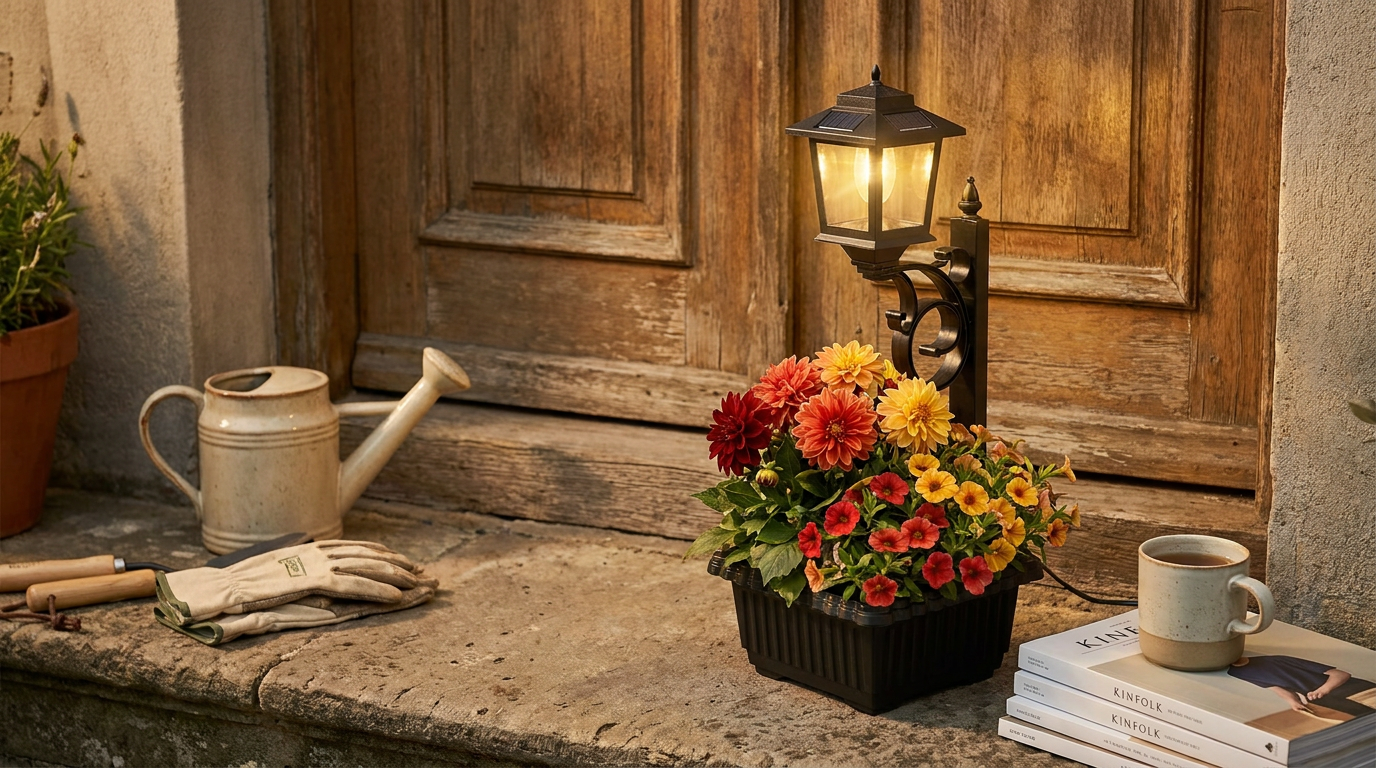
It turns out that the Solar Planter Lamp bridges this gap by merging a 3000K warm-toned lamp post with a structural base designed for planting. Somewhere around week two of testing, I realized the height was the true differentiator. While standard solar path light with planter options often sit low to the ground, this unit provides a verticality that frames an entrance. The lamp functions as a 2-in-1 system, utilizing a waterproof housing that withstands the inevitable splashing from watering the flowers below. The 3000K color temperature is critical; it avoids the harsh, blue-tinted glare often associated with cheap LEDs, instead casting a soft glow that mimics traditional incandescent bulbs. This light specifically targets the "illuminated outdoor planters" demand seen in recent search trends, providing enough lumen output to define a perimeter without overwhelming the neighborhood. Because the solar panel is integrated into the top of the lamp head, it captures maximum sun exposure while the weight of the soil in the planter base provides a natural ballast against wind. This eliminates the need for permanent mounting hardware in many scenarios, allowing for a portable yet sturdy lighting solution. For those who prefer a more color-focused approach, integrating led solar flower pots alongside these taller lamps creates a layered lighting effect that mimics professional landscape architecture. I keep coming back to the way the light hits the foliage from above, creating shadows and textures that solar lights in flower pots on Pinterest often attempt to replicate but rarely achieve with such stability.
Selecting the right placement for these units requires a bit of strategy to ensure both the plants and the internal batteries thrive. You have to consider the solar path—not just for the light, but for the specific species of flowers you intend to house in the base. It is a delicate dance between sun for the panel and the right microclimate for the roots. To get the most out of this setup, consider this framework for your layout:
- Verify that the chosen location receives at least six hours of direct sunlight to fully charge the 3000K LED system.
- Select drought-tolerant plants if the planter will be in a high-heat, full-sun area to reduce the frequency of watering.
- Pair the tall Solar Planter Lamp with smaller led solar flower pots to create depth and varying heights in your garden beds.
- Ensure the drainage holes in the planter base remain clear to protect both the plant roots and the structural integrity of the lamp post.
- Clean the solar cell cover once a month with a damp cloth to maintain maximum charging efficiency.
- Position the lamps at key transition points, such as the start of a walkway or flanking a doorway, to maximize the safety benefits of the solar path light with planter style.