Why Flat Deck Lighting Fails: A Vertical Approach to Design
 Maya ChenContributing Editor
Focusing on step and post lights creates a flat, uninspired deck; true modern design uses integrated fixtures to add vertical dimension and bring the space to life. The current consensus on modern solar deck lighting ideas prioritizes small, adhesive lights for stairs and railings. While these fixtures offer wire-free convenience, they only illuminate the horizontal plane, effectively placing a visual lid on your outdoor space at night and making it feel confined.
The Problem with Horizontal-Only Illumination
The conventional wisdom says to line a deck's perimeter with low-profile lights to improve safety and create ambiance. Here's the part nobody talks about: this strategy shrinks your deck after sunset. By exclusively lighting the floor and railings, you draw a hard, low boundary that prevents the eye from appreciating the volume of the space. The result is a well-lit floor inside a dark box. This approach ignores the vertical real estate that defines a space as an open-air room rather than just a platform.
A Vertical Solution: Integrating Light and Life

Photo by Viktoria Salas on Pexels
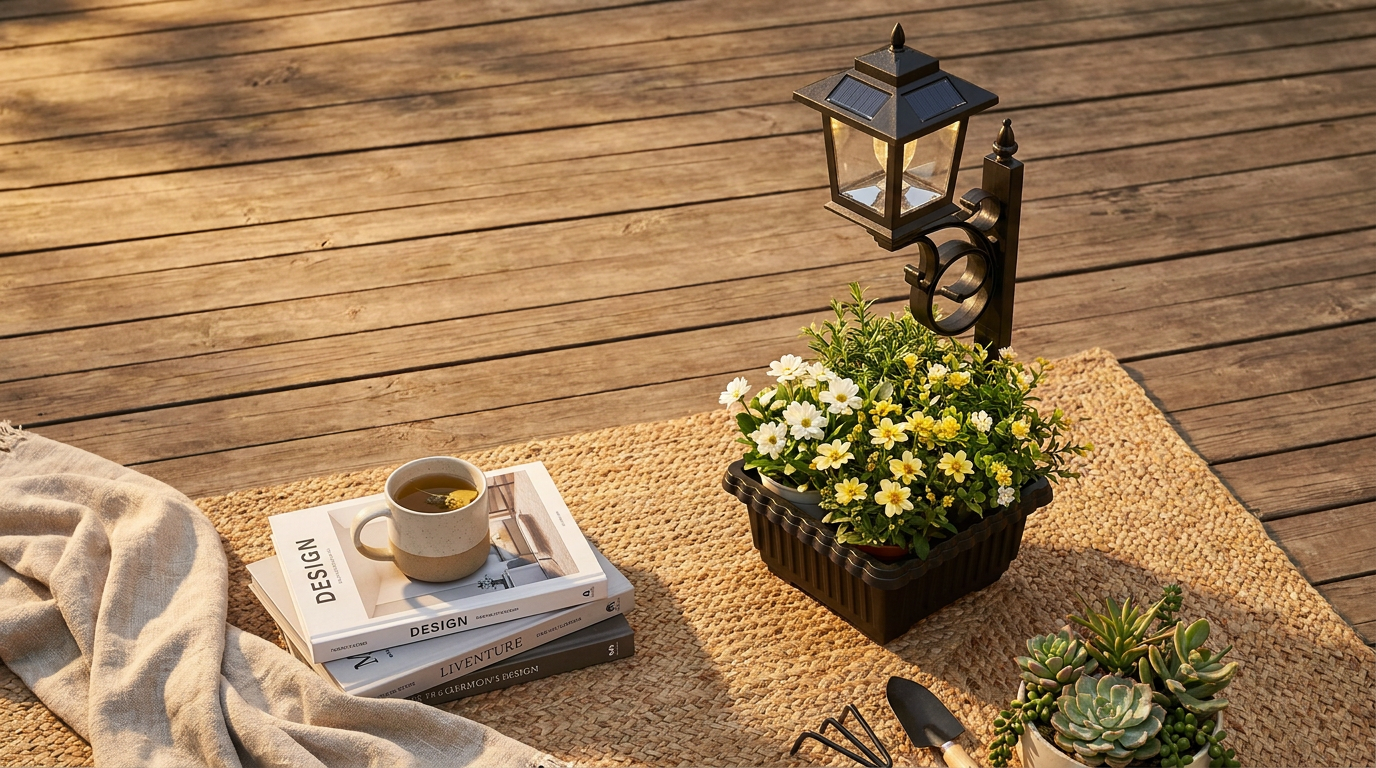
A superior strategy involves drawing the eye upward. By integrating a light source with a functional, vertical element like a planter, the fixture serves a dual purpose. It provides broad illumination while creating a sense of height and openness. This method aligns with principles of biophilic design, which seeks to connect humans with nature by incorporating natural elements into our built environments. Instead of static, one-dimensional light, you get a dynamic feature that contributes to the deck's living ecosystem.
This is precisely how a solar planter lamp functions. It combines a 3000K LED light source with a self-contained planter, transforming a simple light fixture into a piece of living architecture. This is particularly effective in compact areas, making it a logical choice for an outdoor solar planter for porch setup where every square foot counts. Run the math: a single Solar Planter Lamp can cast a usable light radius of over 8 feet, covering more than 50 square feet of seating or high-traffic area, a task that would require a dozen smaller, ground-level lights.
A Framework for Vertical Lighting Design
Adopting a vertical lighting strategy is about placement, not just product. Use taller fixtures as anchors to define the corners of your outdoor room and create a sense of scale. This approach also helps create a cohesive visual journey from the front of your property to the back, especially when paired with the best solar lights for front door landscaping.
I'll change my mind when a standard solar post cap can illuminate a 50-square-foot seating area while also supporting a pot of living basil. Until then, the dual utility of integrated solar planters remains the most intelligent choice for a modern deck that feels both expansive and intentionally designed.
How does vertical lighting make a deck feel larger?

By drawing the eye upward, vertical lighting breaks the low horizontal plane created by floor and step lights. This creates an illusion of height and volume, tricking the brain into perceiving the space as larger and more open, much like high ceilings or tall curtains do for an indoor room.
Can a single solar planter lamp light an entire deck?
A single unit is designed as a powerful anchor light, not a replacement for all other illumination. For a standard 200-square-foot deck, one or two Solar Planter Lamps can provide the primary illumination for key zones like dining or seating areas. This should be supplemented by smaller accent lights to achieve a layered, dimensional effect rather than a single, flat wash of light.