Eco-Friendly Patio Mood Lighting with Solar Planter Lamp
 Sam VasquezBuying Guide Lead
September 14, 2026. This guide explores how to integrate sustainable illumination into outdoor living spaces using integrated planter systems. It is written for homeowners seeking to balance aesthetic atmosphere with environmental responsibility.
The Challenge of Sustainable Outdoor Ambience
Creating a welcoming patio environment often leads to a conflict between visual appeal and energy consumption. Traditional outdoor lighting relies on high-voltage wiring that requires significant trenching and professional installation, which can disrupt local soil health and root systems. Furthermore, standard incandescent or halogen outdoor bulbs are notorious for energy waste and frequent replacement cycles. According to Vegan Design, outdoor lighting should avoid white fluorescent lights and instead focus on fully shielded fixtures to minimize light pollution and protect local wildlife.
When we look at illuminated outdoor planters, the goal is to provide enough light for safety and mood without overwhelming the natural environment. Many homeowners struggle with the "light spill" common in cheap, unshielded LED stakes that scatter light upward into the night sky rather than down toward the walking path or the foliage. This is where the concept of eco-friendly patio mood lighting becomes a technical challenge: how do you get enough lumens to enjoy a glass of wine on the terrace without driving up your utility bill or harming the local ecosystem? The shift toward low-voltage and solar-integrated systems is a direct response to these concerns. As noted by Keltie & Clark, LED bulbs are a primary choice for eco-conscious homeowners because they are recyclable and free from toxic materials commonly found in older bulb technologies. If you are looking for glowing outdoor planters for patio use, the focus must remain on the quality of the light source and its power origin.
Integrating the Solar Planter Lamp into Modern Patios
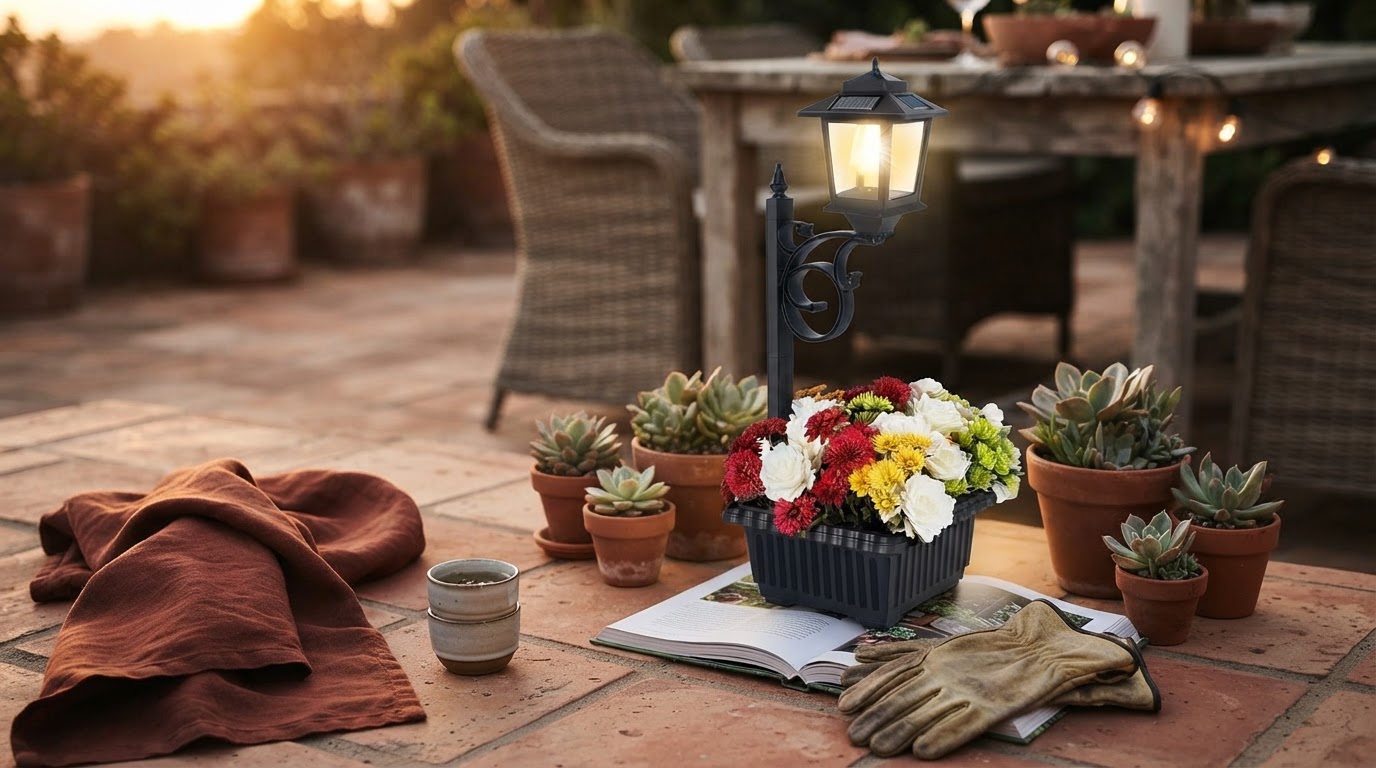
The Solar Planter Lamp addresses these environmental concerns by consolidating the energy collection, storage, and light emission into a single, self-contained unit. These fixtures function as a 2-in-1 outdoor flower pot, utilizing a solar post light with a planter base. The hardware typically features a 3000K warm white LED, which aligns with the recommendations from in-lite regarding sustainable practices that favor energy-efficient LEDs and recyclable fixtures. By using a 3000K color temperature, the lamp provides a soft, amber-toned glow that mimics traditional flame or incandescent warmth without the associated carbon footprint.
Between these two options—traditional hardwired LED planters and the Solar Planter Lamp—I’d go with the solar-integrated version for any space that receives at least six hours of direct sunlight. The elimination of copper wiring and plastic conduits makes it a significantly greener choice for the DIY enthusiast. These units are designed to be waterproof and durable, ensuring that the solar garden pot illumination remains consistent through rain or irrigation. When setting up led garden planters solar systems, the placement is the most critical factor. The Solar Planter Lamp uses a high-efficiency solar panel typically located on the top of the lamp post, which charges an internal battery during the day to power the light up flower pots outdoor throughout the evening. Unlike standard illuminated garden planters that require a nearby outlet, these can be placed in the center of a lawn or the far corner of a deck where wiring would be cost-prohibitive. For those focusing on led garden planters solar setups, the integrated design prevents the common eyesore of separate solar panels and messy wires stretching across the mulch.
Selection Framework for Sustainable Planter Lighting
When choosing your hardware, you need to look past the initial glow. Here’s what I’d actually buy: a unit that prioritizes battery longevity and housing durability over sheer brightness. A high-lumen output is useless if the battery dies two hours after sunset. If you're on a budget, you might be tempted by plastic glow-pots that use internal batteries, but these often lack the structural integrity to hold heavy soil and large plants over multiple seasons. Skip this if your patio is entirely north-facing or sits under a heavy permanent awning, as solar-powered plant pots require consistent UV exposure to function. For those with adequate sun, follow this checklist to ensure your choice is actually eco-friendly:
- Verify Shielding: Ensure the lamp head is directed downward or fully shielded to prevent light pollution, a key tenet of responsible outdoor lighting.
- Check Battery Replaceability: Sustainable products should not be disposable; look for units where the internal NiMH or Lithium battery can be replaced after a few years of service.
- Assess Material Durability: The planter base should be made of UV-resistant, recyclable materials that won't crack and end up in a landfill after one winter.
- Color Temperature: Stick to 3000K or lower. Higher Kelvin ratings (blue-toned light) are harsher on the eyes and more disruptive to nocturnal insects.
- Weight and Stability: A solar post light with a planter base needs enough volume to act as an anchor, preventing the lamp from tipping in high winds.