Integrating Solar Planter Lamp Systems for Patio Lighting
 Daniel OkaforField Tester
October 1, 2026. This evaluation explores the practical application of patio lighting with built-in planters to solve common outdoor electrical hurdles. It is intended for homeowners seeking to blend botanical displays with functional illumination without the need for trenching or wiring.
The Challenge of Permanent Patio Illumination
I spent three weeks testing various configurations for outdoor lighting, and the primary obstacle is almost always the power source. When you are dealing with a finished stone or wood patio, installing traditional wired fixtures requires either tearing up the surface or leaving unsightly conduits exposed. According to Thrifty Decor Chick, many homeowners attempt to solve this by creating DIY string light cement planters to hold heavy poles, but these often lack an integrated light source, requiring additional string lights that can sag or fail over time. In my own tests, these heavy DIY builds were difficult to move once the seasons changed, and the lack of a dedicated light at the base meant the plants themselves remained in the dark.
I tested this for several late-evening gatherings and noticed that without a self-contained power unit, the aesthetic of the patio was constantly interrupted by extension cords. What surprised me was how much the height of the fixture influenced the overall feel of the space; standard ground-level solar stakes often get swallowed by foliage. Instructables contributors have noted that mounting posts in half-barrel planters provides a better height, but this still leaves the user responsible for the wiring and weatherproofing. During a particularly heavy rainstorm on day three, my makeshift wired setup shorted, reinforcing the need for a fully sealed, wireless solution. The goal for most of us is a [wireless outdoor foyer lighting aesthetic](/blog/wireless-outdoor-foyer-lighting-aesthetic) that feels intentional rather than a temporary fix.
Performance of the Solar Planter Lamp System
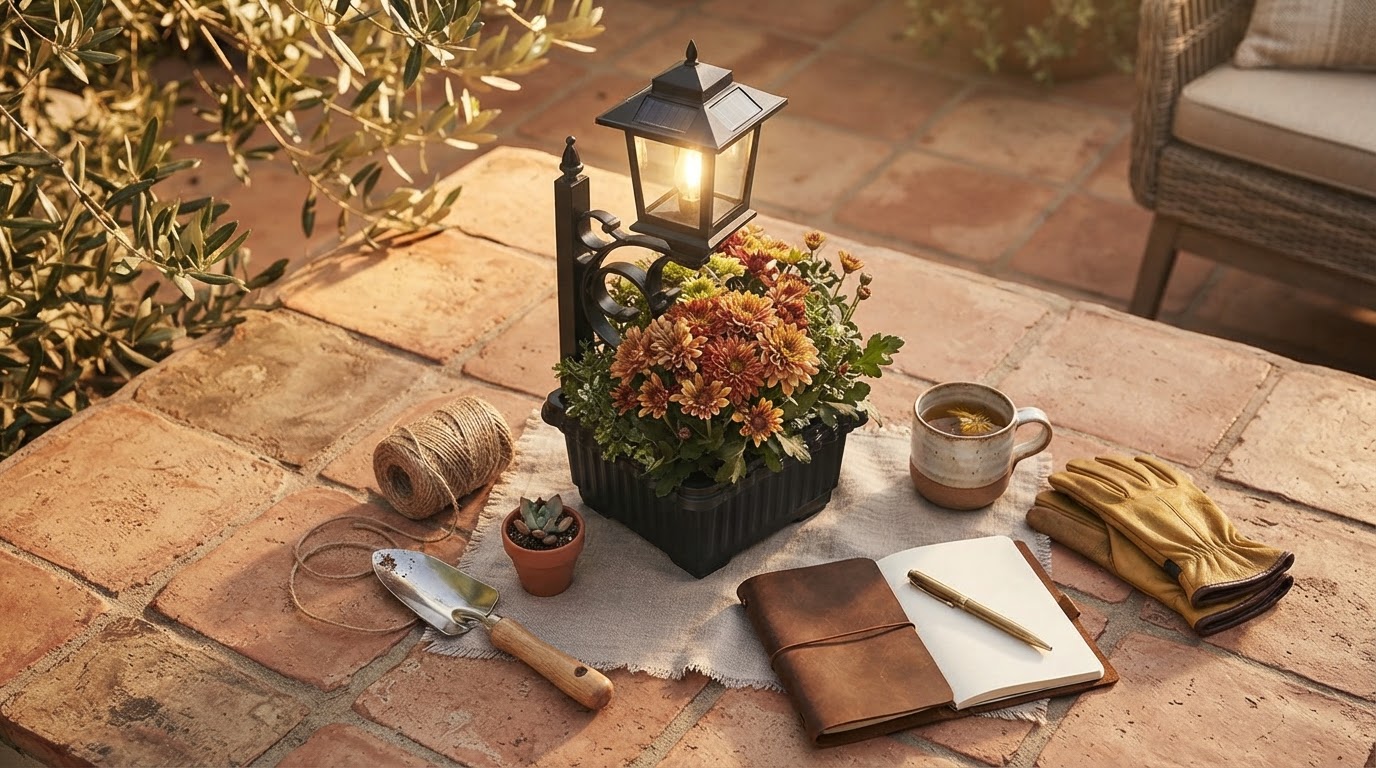
When I switched to the Solar Planter Lamp, the first thing I noticed was the elimination of the ballast problem. Because the planter base serves as the anchor, the 3000K LED lamp post remains stable even in moderate wind. Here's the moment it earned its place: I placed two units flanking the transition from the deck to the garden, and the built-in solar panels charged sufficiently even on a partially overcast Tuesday to provide a consistent glow until well after midnight. Unlike a modern solar porch light planter which might be designed for smaller vertical spaces, this specific lamp post configuration provides enough downward light to illuminate the flowers in the pot while casting a wide enough radius to serve as safety lighting for the patio perimeter.
Day three is where I noticed the efficiency of the 2-in-1 waterproof design. I had planted heavy-feeding petunias that required daily watering. With cheaper alternatives, I’ve seen water seep into the battery compartment, but the Solar Planter Lamp housing remained dry despite my clumsy watering habits. The integration of the light into the planter post solves the height issue mentioned by Instagram creators at Outdoor Glow Please, who noted that taller landscape lighting makes a significant difference in how a garden is perceived at night. By using lighted planters for front porch areas or patios, you create a tiered lighting effect that ground-level stakes simply cannot replicate. The light up flower pot solar capability means the container itself becomes a feature, rather than just a dark silhouette against the house.
Criteria for Selecting Integrated Solar Lighting
Choosing the right fixture involves more than just looking at the lumen output. You have to consider the weight of the soil when wet and how the planter will handle drainage without damaging the solar internal components. I’ve found that lighted planters for front porch use cases require a different stability profile than those used on a flat, wind-shielded patio. If I were doing this differently, I would have opted for a larger variety of [illuminated outdoor planters](/blog/lighted-planters-for-front-porch) to create a more varied height profile across the deck. When evaluating these units, I look for a balance between the planter volume and the solar panel surface area to ensure the light doesn't die out by 10 PM.
When you are ready to install your own system, follow this decision framework to ensure longevity:
- Verify the IP rating for waterproofing, especially if you plan to use an automated drip irrigation system for your plants.
- Ensure the planter base has sufficient diameter to prevent tipping if you are installing a taller lamp post model.
- Check that the LED color temperature is 3000K or lower to maintain a warm, inviting atmosphere rather than a harsh blue light.
- Position the units where they will receive at least six hours of direct sunlight, avoiding shadows cast by the house or large trees.
- Look for units that allow for battery replacement, as even the best solar cells will eventually need a fresh power cell after a few seasons.
Enhancing your outdoor living space requires equipment that can withstand the elements while providing consistent utility. The Solar Planter Lamp offers a streamlined way to combine your gardening hobby with necessary patio illumination.