Modernizing Deck Design with the Solar Planter Lamp
 Priya RamanSenior Analyst
October 9, 2026. This analysis examines the technical and aesthetic integration of the Solar Planter Lamp into modern residential deck environments. It is designed for homeowners and property managers seeking to maximize outdoor utility through self-sustaining lighting systems. To evaluate the efficacy of these installations, two axes matter here: the functional requirement for safety and the psychological requirement for ambiance. Think of it as a matrix of visibility versus atmosphere, where the goal is to achieve high-performance illumination without the infrastructure costs of hardwired systems.
The Complexity of Traditional Deck Lighting Infrastructure
The primary challenge in modern deck design is providing consistent light without compromising the structural integrity of the build. According to The Spruce, traditional lighting ideas often range from recessed railing lights to complex string configurations, many of which require professional electrical installation and weather-proofing. Hardwired systems introduce permanent conduits that can become points of failure or moisture ingress in wooden and composite decking. Furthermore, the search for eco friendly patio mood lighting has highlighted a growing consumer dissatisfaction with high-energy consumption fixtures that remain active throughout the night regardless of occupancy. The physical constraints of a deck often mean that once a lighting plan is executed, it is difficult to modify without significant labor. This rigidity often leads to "dark spots" or over-illuminated zones that fail to accommodate the fluid nature of outdoor living. Homeowners frequently find that fixed post lights do not provide the localized warmth needed for seating areas, while temporary solutions lack the durability to withstand seasonal transitions.
Integrating the Solar Planter Lamp into the Design Matrix
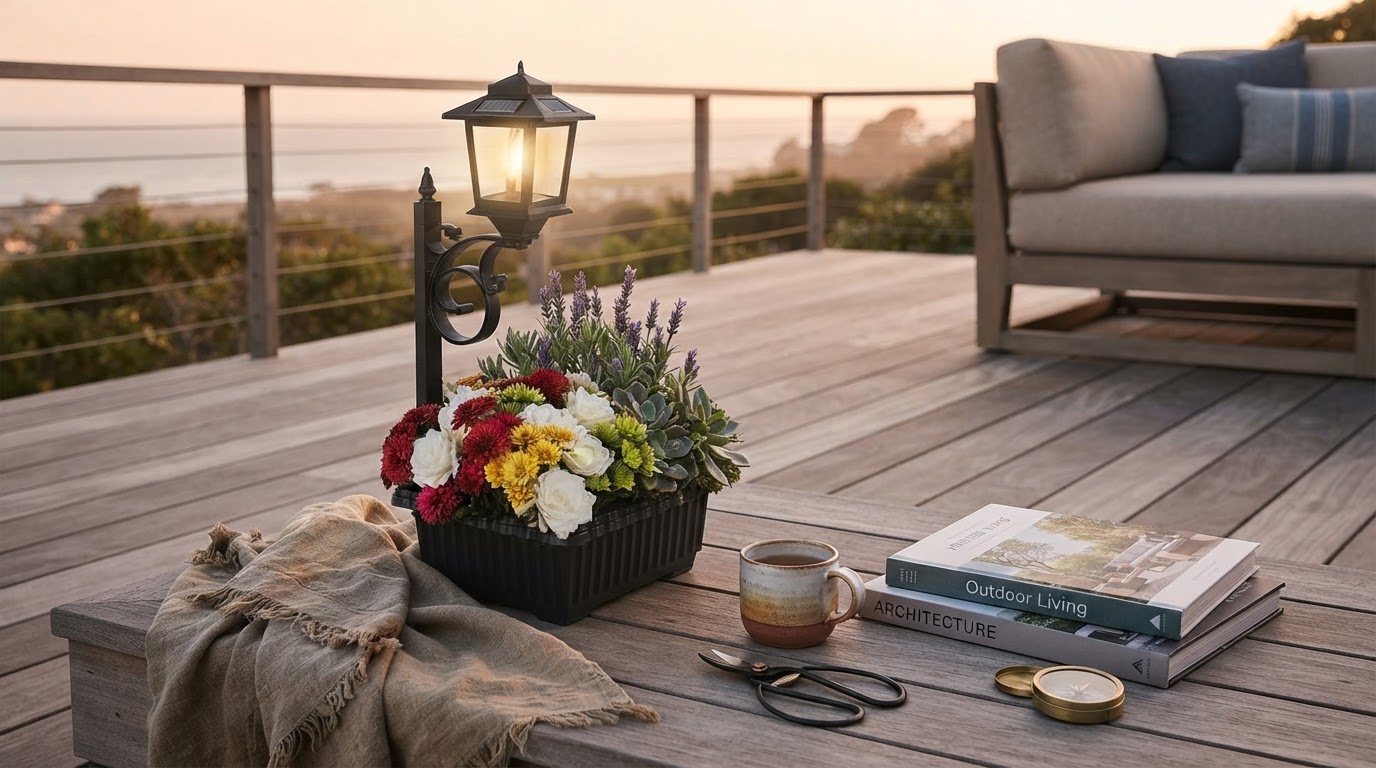
The Solar Planter Lamp addresses these spatial and technical constraints by decoupling the light source from the home's electrical grid. By utilizing a 2-in-1 design that features a waterproof 3000K LED lamp atop a functional planter base, the unit serves as both a structural anchor and an illumination source. This dual-purpose utility is central to creating glowing outdoor planters for patio spaces that feel intentional rather than modular. The lamp functions by capturing solar energy during daylight hours, storing it in internal batteries to power the LED throughout the evening. This eliminates the need for the wiring mentioned by The Deck Store, which notes that solar post caps and similar fixtures offer an easy way to add lighting to any railing without professional assistance. For decks that utilize vertical space, a solar powered hanging planter light can complement the floor-standing Solar Planter Lamp, creating a layered lighting effect that mimics high-end interior design. Because these units are portable and require no tethering, they allow for a dynamic layout that can be adjusted as furniture is moved or as plant growth changes the deck's silhouette. The 3000K color temperature is specifically chosen to provide a warm, inviting glow that avoids the clinical blue tint often associated with lower-quality solar products, ensuring that the lighted planters for front porch and deck areas maintain a premium aesthetic.
A Framework for Selecting Solar Deck Fixtures
Once you see it this way, the selection process becomes a matter of balancing weight, light output, and plant compatibility. The decision rule: prioritize fixtures that offer a minimum IP65 waterproof rating and a weighted base to ensure stability against wind and accidental displacement. While illuminated garden planters are often chosen for their visual impact, their functional role in defining the perimeter of a deck is equally vital. When planning your layout, consider the following technical checklist to ensure the Solar Planter Lamp meets your specific environmental needs:
- Solar Exposure Analysis: Ensure the placement area receives at least 6 hours of direct sunlight to reach full battery capacity for 8-10 hours of night operation.
- Load Bearing and Stability: Verify the planter base is filled with appropriate drainage material and soil to lower the center of gravity, preventing tipping during high winds.
- Color Consistency: Match the 3000K warm white output across all fixtures, including any solar powered hanging planter light units, to maintain a unified visual temperature.
- Drainage Management: Confirm that the integrated planter includes proper drainage holes to protect both the plant health and the internal LED housing from water stagnation.
- Path Clearance: Position lamps at least 3 feet away from high-traffic stairs to prevent obstruction while still providing enough spillover light for safe navigation.