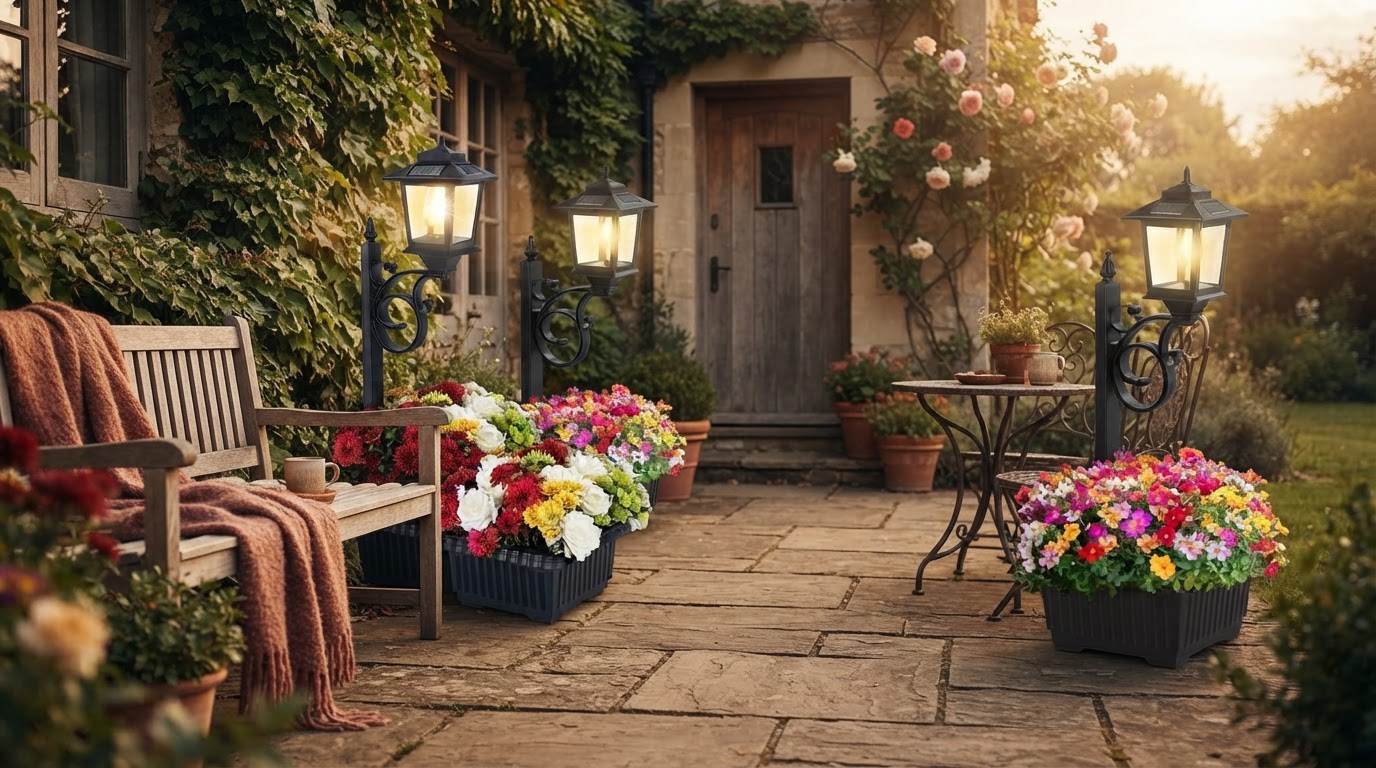
Joyoowild 3-Head Post vs. HOODINK Solar Planter Lamp
 Maya ChenContributing Editor
October 14, 2026 — The market for oversized solar fixtures is currently focused on the Joyoowild 3-Head Solar Lamp Post, which has seen a significant price drop via third-party retailers. While the aesthetic of a 74-inch triple-head unit attracts attention, the actual utility of these high-profile units often fails to meet the efficiency benchmarks set by more compact alternatives like the HOODINK Solar Planter Lamp.
The conventional wisdom says that more heads equal better light coverage, but this ignores the fundamental math of solar collection versus output. According to Slickdeals.net, the Joyoowild 3-Head Solar Lamp Post is currently listed for $59.99, a 50% reduction from its $119.99 sticker price when using a specific promo code. While a 50% discount is a significant margin for a unit that includes two extra Edison-style bulbs, the energy drain of three separate lamps on a single post often results in diminished run times during winter months.
Photo by Jimmy Liao on Pexels
Run the math: The HOODINK Solar Planter Lamp utilizes 4 high-performance solar panels to power a single 3000K warm light source. This ratio ensures an 8-10 hour discharge after a standard 6-8 hour charge cycle. In contrast, multi-head units often struggle to maintain consistent voltage across all bulbs unless the solar array is proportionally expanded. When evaluating solar lighting durability, the IP44 waterproof rating of the HOODINK unit provides a baseline for year-round performance that many budget-tier imports fail to document clearly.
Here's the part nobody talks about: height creates leverage for wind. A 74-inch post requires a substantial base to avoid tipping, whereas the dual-setup options of the HOODINK—allowing for ground staking or wall mounting—offer superior installation flexibility in high-wind corridors. For those focused on landscape integration, the weight of a fully planted base is often the only thing keeping these top-heavy fixtures upright.
Expert tip: When installing solar planters, prioritize drainage. Even with an IP44 rating, standing water in a plastic planter can lead to localized humidity spikes that may fog the LED housing over time. Ensure your soil mix allows for rapid percolation to protect the internal circuitry.
I'll change my mind when multi-head solar posts provide independent battery banks for each lamp head to prevent total system failure from a single shaded panel.