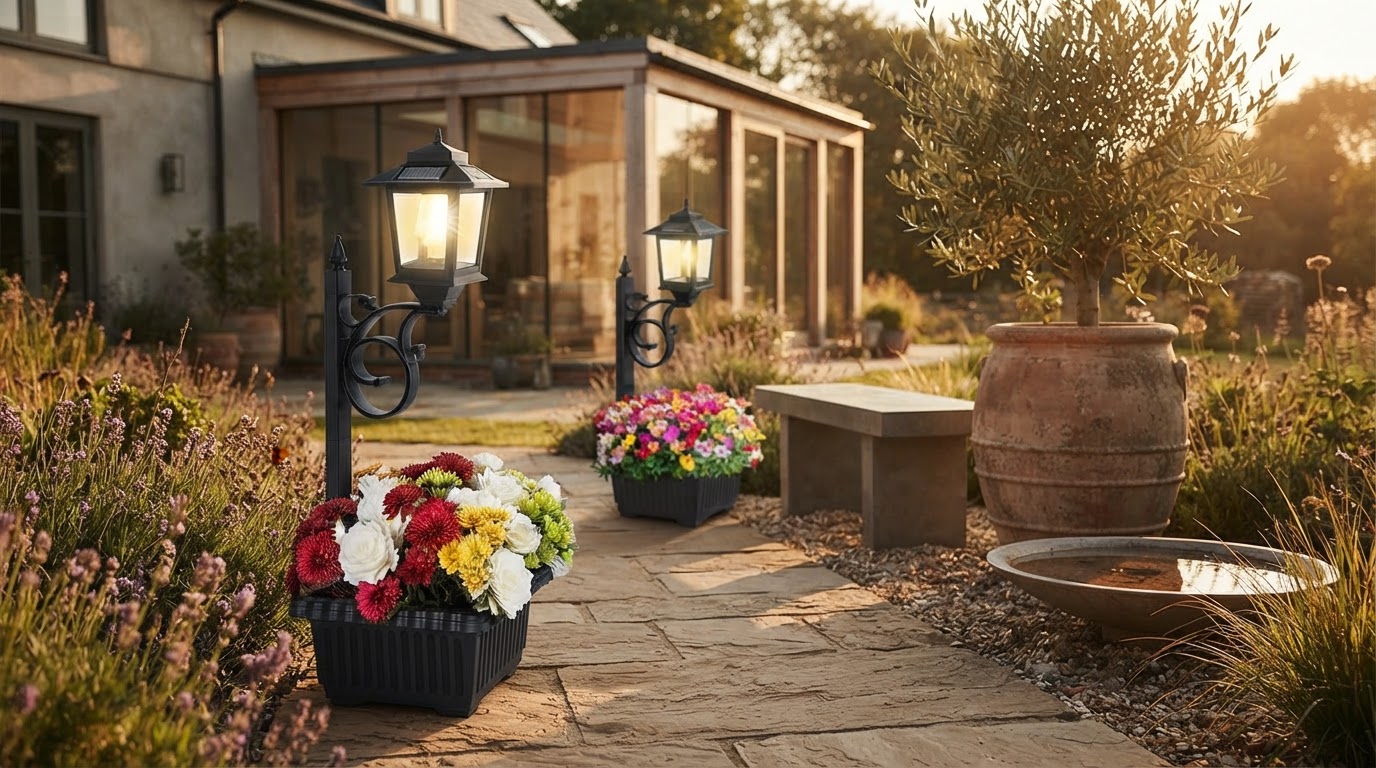
Joyoowild Solar Post Discount vs. Durable Planter Specs
 Maya ChenContributing Editor
October 4, 2026 — The market for integrated garden lighting is currently fixated on steep discounts for multi-head fixtures, specifically the Joyoowild 74-inch solar lamp post. While the price drop suggests high value, the technical trade-offs between height and charging efficiency merit closer inspection. The conventional wisdom says that more lamp heads equate to better illumination, but this ignores the battery-to-panel ratio required to sustain such a load.
According to Slickdeals.net, Amazon has listed the Joyoowild 3-Head Solar Lamp Post with Planter for $119.99, though a promotional code (HLN6PO2F) currently slashes that price by 50% to $59.99. While a sub-$60 price point for a six-foot fixture is aggressive, the part nobody talks about is the longevity of ABS plastic under the weight of three separate light housings. Run the math: a single 3000K warm light source, such as the one found in the Solar Planter Lamp, utilizes four high-performance solar panels to achieve an 8-10 hour runtime. Splitting similar solar intake across three heads often results in diminished brightness or shorter operational windows during winter months.
Reliability in outdoor fixtures is rarely about height and usually about the IP rating and mounting versatility. The Hoodink 2-pack models prioritize a dual-setup option, allowing for ground staking or wall mounting, which mitigates the structural risks inherent in taller, top-heavy plastic posts. When evaluating solar lighting durability, one must consider the IP44 waterproof rating and how it handles seasonal weather transitions compared to taller, less stable units. Furthermore, automatic dusk-to-dawn sensors are only as effective as the battery's ability to store a 6-8 hour charge.
Expert tip: Before committing to a 74-inch post, verify the base weight of the planter when filled. A top-heavy 3-head unit requires at least 15-20 pounds of damp soil or stone at the base to prevent tipping during high winds, a factor often overlooked in promotional listings.
I'll change my mind when budget multi-head units provide independent laboratory testing for lumen maintenance after 500 charge cycles. Until then, the data suggests that smaller, high-efficiency units offer more consistent performance per square foot.