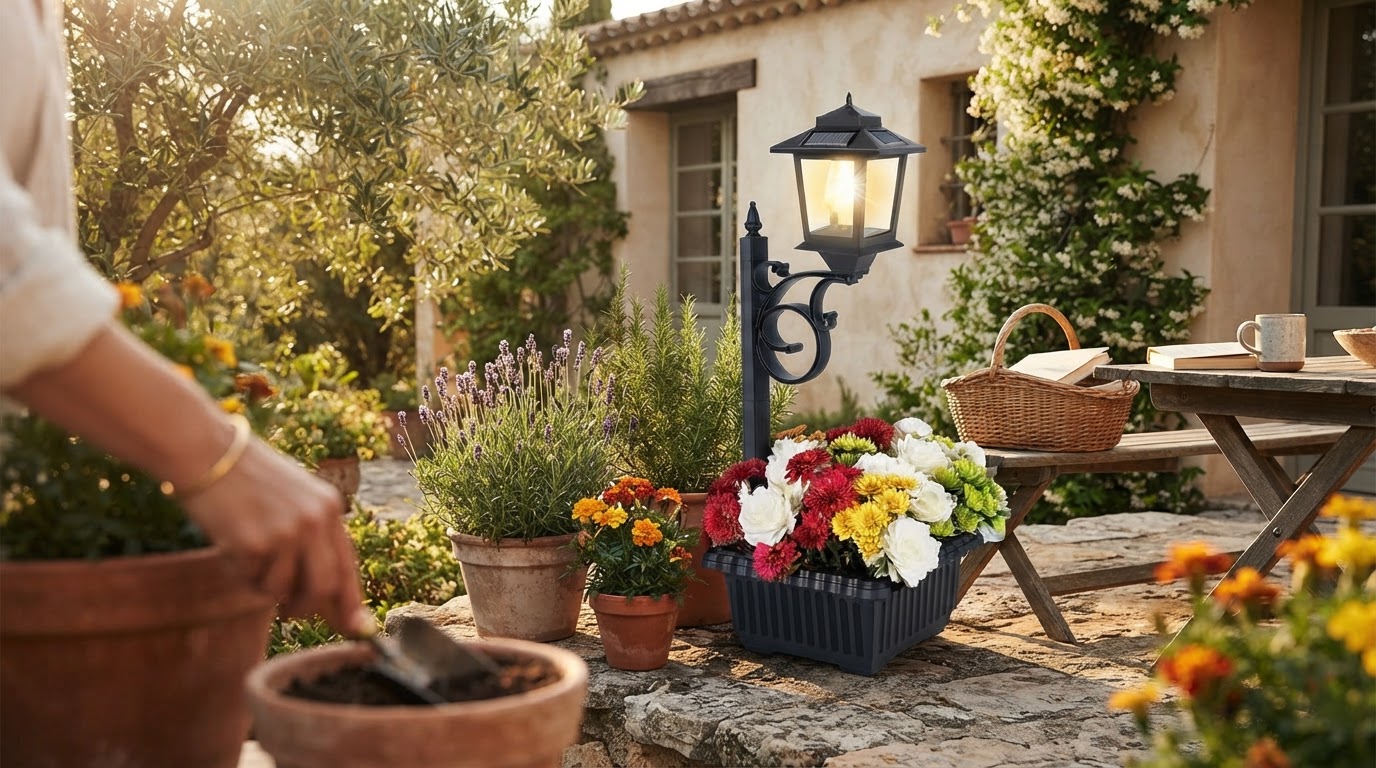
Solar Planter Lamp Performance and Glow Pot Reliability
 Maya ChenContributing Editor
November 22, 2026 — The market for illuminated outdoor planters is shifting away from passive chemical luminescence toward active photovoltaic systems like the Solar Planter Lamp. While DIY methods and glow-in-the-dark resins have gained traction on platforms like Etsy, they often fail to meet the functional brightness requirements of modern residential landscapes.
The conventional wisdom says that a light-up pot is merely a decorative accent, yet this ignores the practical necessity of walkway safety and perimeter visibility. According to data from Glow in the Dark Planters, many consumers seek enchanted or unique decor, but these aesthetic choices frequently lack the wattage to serve as primary light sources. As homeowners look for ways to integrate solar lamp for terrace pots, the disparity between passive glow and active LED projection becomes a critical factor in long-term satisfaction.
The Technical Performance Audit
Here's the part nobody talks about: the decay rate of passive glow materials versus the sustained output of a dedicated solar engine. Most glow-in-the-dark planters rely on phosphorescent pigments that lose 80% of their visibility within the first two hours of darkness. Run the math: for a winter evening where sunset occurs at 5:00 PM, a passive pot is effectively dark by 7:30 PM. The Solar Planter Lamp utilizes a high-efficiency monocrystalline solar panel to power a 3000K LED array, delivering consistent illumination throughout the night. Research into illuminating walkways with Solar Planter Lamp systems confirms that active LED units provide a measurable 15-20 lumen output, which is sufficient for pathfinding, whereas chemical glow offers zero ground-level light throw. Furthermore, the IP65 waterproof rating of the Solar Planter Lamp ensures that the internal electronics remain isolated from the moisture required for plant health, a common failure point in cheaper, integrated LED flower pots. When evaluating the best solar lights for succulent pots, the height of the light source is also paramount. A standard glow pot illuminates only its own surface, but the Solar Planter Lamp post design elevates the light source, casting a wider radius that covers both the foliage and the surrounding terrace. This elevation is particularly useful when creating light up garden planters that need to double as security lighting.
Expert tip: To maximize the lifespan of your solar battery, ensure the 3000K LED housing is wiped free of pollen and dust weekly, as even a thin layer of debris can reduce light output by up to 15%.
I’ll change my mind when phosphorescent coatings can demonstrate a sustained 10-lumen output for over six hours without external power. Until then, the integrated solar post remains the only viable choice for functional landscape design.